
Safeguarding
Safeguarding
Safeguarding
Calisthenics Safeguarding Policy
1. Introduction
The UKCO [Calisthenics National Governing Body (NGB)] is dedicated to providing a safe and secure environment for children, young people and vulnerable adults who are involved in the sport of Calisthenics. We recognise the trust placed in us by participants and their families and we are committed to safeguarding and promoting the wellbeing of everyone in our sport. This includes preventing all forms of abuse and ensuring our sport is safe for all to enjoy.
The Calisthenics Safeguarding Policy is a document that is informed by national standards, guidelines and best practices as set out by both Sport England’s Safeguarding Policy-and Parkour UK. As relevant child protection laws, from similar Governing bodies was an important framework for safeguarding children, young people and vulnerable adults, as well as protecting coaches and volunteers from potential risks.
2. Policy Purpose
The purpose of this Safeguarding Policy is to:
Establish clear safeguarding procedures that will prevent and respond to allegations of abuse or neglect.
Provide clear guidance for all involved in Calisthenics (athletes, parents, coaches, volunteers, staff and officials) on their roles and responsibilities in safeguarding.
Promote the welfare of children and vulnerable adults by ensuring they are provided with the best possible environment for participation in Calisthenics.
Demonstrate the UKCO’s commitment to safeguarding and align with the policies of Sport England and Parkour UK.
3. Definitions and Key Terms
3.1 Key Terms and Definitions
For the purpose of this policy, the following definitions are used to ensure clarity on terminology and the types of safeguarding issues addressed:
Safeguarding: Actions to prevent the abuse, neglect, or exploitation of children or vulnerable adults, ensuring a safe and positive environment for participants.
Child Protection: Part of safeguarding, focusing specifically on protecting children from harm or abuse.
Vulnerable Adult: An individual aged 18 or over who is at risk of harm due to physical, mental, or emotional incapacity.
Abuse: An act of mistreatment or neglect that causes harm, distress, or injury to a child or vulnerable adult.
Duty of Care: The responsibility of the organisation to take reasonable steps to ensure the safety and wellbeing of participants during training, events, competitions and other activities.
3.2 Types of Abuse
Abuse can occur in several forms and may include:
1. Physical Abuse: The deliberate infliction of physical harm. For example, hitting, slapping, or excessive use of force.
2. Sexual Abuse: Non-consensual sexual activity, exploitation, or inappropriate sexual behaviour directed toward a child or vulnerable adult. This includes inappropriate touch or sexualised language.
3. Emotional or Psychological Abuse: Behaviour that harms the emotional wellbeing of an individual, such as bullying, humiliation, threats and manipulation.
4. Neglect: Failing to provide the basic needs of a child or vulnerable adult, including food, shelter, supervision and medical care.
5. Bullying: Repeatedly targeting a participant with harmful behaviour, such as physical or verbal abuse, exclusion or intimidation. Bullying can be face to face or online (cyberbullying).
6. Financial Abuse: Taking advantage of vulnerable individuals for financial gain, which can sometimes affect young participants or vulnerable adults.
4. Roles and Responsibilities
4.1 Designated Safeguarding Officer
The Designated Safeguarding Officer is the central figure responsible for managing safeguarding concerns within the organisation. The DSO is responsible for ensuring that all safeguarding procedures are followed, reporting concerns to the appropriate authorities and overseeing investigations into allegations of abuse.
Responsibilities of the DSO include:
Primary contact: The DSO is the main point of contact for all safeguarding issues, queries and concerns.
Training: The DSO must ensure that all staff and volunteers undergo regular safeguarding training and remain informed of updates in safeguarding practices.
Record-keeping: Maintain accurate, confidential records of safeguarding concerns and the actions taken.
Liaison with agencies: The DSO will work with local authorities, social services and law enforcement when required.
Annual reviews: The DSO is responsible for conducting an annual review of safeguarding policies and procedures to ensure compliance with updated regulations.
4.2 Coaches, Volunteers and Staff
Coaches, volunteers and staff have a Duty of Care towards all participants, especially children and vulnerable adults. They are responsible for:
Promoting a positive and respectful environment.
Ensuring safe training practices and managing any risks associated with physical activities.
Recognising signs of abuse or neglect and reporting concerns immediately to the DSO.
Respecting personal boundaries, including refraining from inappropriate physical contact.
Ensuring that any interactions with participants (such as through social media) are professional, transparent and appropriate.
4.3 Parents and Guardians
Parents and guardians play an essential role in safeguarding. They should:
Support and educate their children about personal safety and how to report any concerns.
Communicate openly with coaches and staff about any specific needs, vulnerabilities, or safeguarding concerns.
Ensure consent for their child’s participation in events, travel arrangements and activities.
Monitor behaviour and interactions in and outside of Calisthenics sessions.
4.4 Athletes
Children and vulnerable adults involved in Calisthenics should:
Understand their rights to be safe and treated with respect.
Speak up if they feel uncomfortable, unsafe, or experience bullying or abuse.
Follow the Code of Conduct and treat others with respect, both in and out of the gym/competition field
Report concerns to a trusted adult, coach, or safeguarding officer.
5. Procedures for Safeguarding Concerns
5.1 Reporting Concerns
All concerns related to safeguarding should be reported promptly to the Designated Safeguarding Officer (DSO). The following procedures apply:
1. Immediate Safety: If there is an immediate risk to a child's or vulnerable adult's safety, the first priority is to remove the individual from harm and contact emergency services (e.g., police, ambulance) if necessary.
2. Record the Incident: Document the concern in detail, including the nature of the concern, the date, time and location of the incident, as well as the people involved. This should be done as soon as possible, using the Safeguarding Reporting Form.
3. Report to DSO: The concerned individual must report the incident to the DSO or a designated safeguarding representative. The report must be made in writing, with clear, concise details.
4. Confidentiality: Safeguarding concerns will be dealt with confidentially, however information may be shared with external agencies if required to protect a child or vulnerable adult.
5.2 Reporting Methods
In Person: A face to face meeting with the DSO or another safeguarding representative.
Email or Phone: A direct report via email or phone to the DSO. An anonymous hotline may also be available for reporting concerns.
Safeguarding Form: A standardised form for written reports, ensuring all required information is gathered clearly.
5.3 Confidentiality and Information Sharing
All personal details will be kept confidential and information will only be shared on a "need to know" basis.
If necessary, safeguarding concerns will be referred to external agencies such as local authorities, social services, or the police.
In cases where the concern involves potential criminal behaviour, the organisation may need to involve law enforcement without prior consent.
6. Dealing with Allegations of Abuse
6.1 Initial Actions
When an allegation is made, the UKCO will take immediate steps to ensure the safety of the individual and manage the situation appropriately:
1. Remove the Alleged Perpetrator- If the allegation involves a coach, volunteer, or another participant, immediate action will be taken to ensure they do not have access to children or vulnerable adults until the situation is resolved.
2. Consult the Authorities- In cases of serious allegations, the DSO must immediately contact local authorities (police and social services) for advice or to initiate an investigation.
3. Protection for the Victim- The individual making the allegation will receive support throughout the process, including access to emotional and psychological support services if necessary.
6.2 Investigating Allegations
Internal Investigation: The DSO will begin an initial investigation, including gathering statements and any other necessary documentation.
External Investigation: If the allegation is serious, the police or other external agencies will conduct a more thorough investigation. The UKCO will cooperate fully with law enforcement and social services.
Support for All Parties: The individual making the allegation, the alleged victim, and the accused will be provided with the necessary support throughout the investigation process.
6.3 Outcomes
No Action: If the investigation determines there is no evidence of wrongdoing, the individual may return to their duties or role, but further monitoring will occur.
Corrective Action: If a breach of policy is identified, actions may include additional training, a warning or a probationary period.
Termination: In cases of severe misconduct, such as proven abuse or neglect, the individual will be removed from their position and where appropriate, expelled from the organisation.
7.Support for Victims and Witnesses
7.1 Emotional Support
Victims of abuse or neglect and any witnesses who may have been involved in a difficult safeguarding incident will be offered the following:
Counselling: Referrals to counselling services or mental health support if needed.
Safe Space: The option to speak privately with a designated safeguarding officer or counsellor.
Ongoing Support: Regular check ins to ensure the individual’s ongoing safety and wellbeing.
7.2 Witness Protection
Witnesses to safeguarding issues will be supported and steps will be taken to ensure they are not exposed to any form of retaliation or further harm.
8. Preventative Measures
8.1 Education and Training
Safeguarding Training: All coaches, volunteers and staff will undergo safeguarding training before commencing their duties. They will also participate in regular refresher courses, ensuring that they are up to date on the latest safeguarding practices.
Athlete Education: Athletes will receive education on their rights, how to stay safe and how to report any concerns they may have. This can be incorporated into training sessions or workshops.
Parent Information: Parents will be provided with information on how they can support safeguarding and the role they play in ensuring their child's safety.
9. Disciplinary Procedures
9.1 Breach of Policy
If a breach of the safeguarding policy occurs, the individual may face disciplinary action, including verbal warnings, written warnings, suspension or expulsion.
9.2 Disciplinary Panel
A disciplinary panel will be convened for serious breaches and the process will be handled in a fair and transparent manner. Both the accused and the person logging the complaint will have the opportunity to present their case and the panel will make a determination based on the evidence.
10. Review and Monitoring
10.1 Annual Review
The Safeguarding Policy will be reviewed annually to ensure it remains effective and in line with current best practices and legal requirements.
10.2 Monitoring
Regular monitoring of safeguarding practices will be conducted through audits, surveys and feedback from participants and parents to ensure the policy’s effectiveness.
11. Creating a Safe Space/Environment
11.1 Staff to Participant Ratios
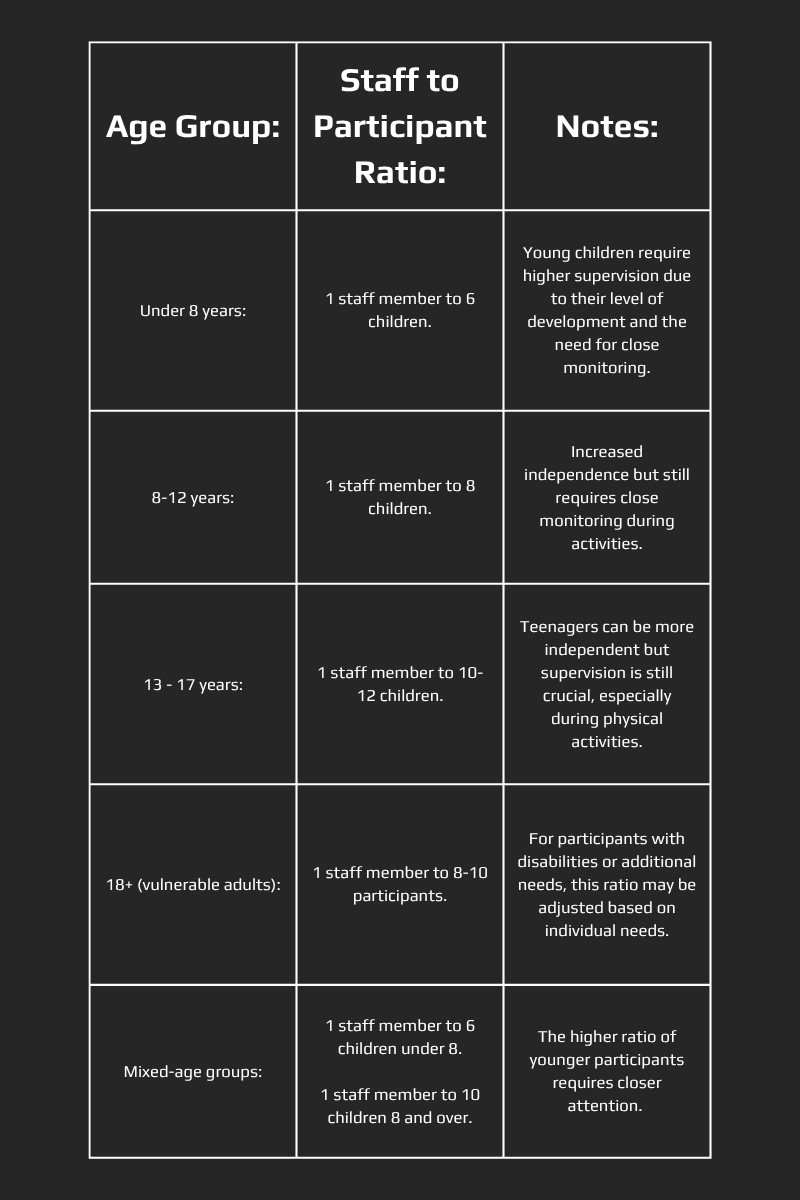
The appropriate staff to participant ratio will depend on several factors, including the age of the participants, the complexity of the activities and any additional needs of the participants. The table below outlines the recommended ratios:
11.2 Special Considerations for Ratios
Adjustments may be made for more complex activities, special needs or larger event settings. These should be reviewed based on risk assessments.
11.3 Best Practices for Creating a Safe Environment
Supervision, emergency procedures, behaviour expectations and other best practices should be implemented to enhance the safety of all participants.
12. Staff Supervision and Development
Training, regular monitoring and ensuring coaching qualifications meet safeguarding standards are critical components of maintaining a safe space for all involved in Calisthenics.
By following these guidelines and maintaining strict adherence to the staff to-participant ratios, this policy ensures that proper safeguarding measures are in place to protect participants and support coaches, volunteers and staff in their roles.
Calisthenics Safeguarding Policy
1. Introduction
The UKCO [Calisthenics National Governing Body (NGB)] is dedicated to providing a safe and secure environment for children, young people and vulnerable adults who are involved in the sport of Calisthenics. We recognise the trust placed in us by participants and their families and we are committed to safeguarding and promoting the wellbeing of everyone in our sport. This includes preventing all forms of abuse and ensuring our sport is safe for all to enjoy.
The Calisthenics Safeguarding Policy is a document that is informed by national standards, guidelines and best practices as set out by both Sport England’s Safeguarding Policy-and Parkour UK. As relevant child protection laws, from similar Governing bodies was an important framework for safeguarding children, young people and vulnerable adults, as well as protecting coaches and volunteers from potential risks.
2. Policy Purpose
The purpose of this Safeguarding Policy is to:
Establish clear safeguarding procedures that will prevent and respond to allegations of abuse or neglect.
Provide clear guidance for all involved in Calisthenics (athletes, parents, coaches, volunteers, staff and officials) on their roles and responsibilities in safeguarding.
Promote the welfare of children and vulnerable adults by ensuring they are provided with the best possible environment for participation in Calisthenics.
Demonstrate the UKCO’s commitment to safeguarding and align with the policies of Sport England and Parkour UK.
3. Definitions and Key Terms
3.1 Key Terms and Definitions
For the purpose of this policy, the following definitions are used to ensure clarity on terminology and the types of safeguarding issues addressed:
Safeguarding: Actions to prevent the abuse, neglect, or exploitation of children or vulnerable adults, ensuring a safe and positive environment for participants.
Child Protection: Part of safeguarding, focusing specifically on protecting children from harm or abuse.
Vulnerable Adult: An individual aged 18 or over who is at risk of harm due to physical, mental, or emotional incapacity.
Abuse: An act of mistreatment or neglect that causes harm, distress, or injury to a child or vulnerable adult.
Duty of Care: The responsibility of the organisation to take reasonable steps to ensure the safety and wellbeing of participants during training, events, competitions and other activities.
3.2 Types of Abuse
Abuse can occur in several forms and may include:
1. Physical Abuse: The deliberate infliction of physical harm. For example, hitting, slapping, or excessive use of force.
2. Sexual Abuse: Non-consensual sexual activity, exploitation, or inappropriate sexual behaviour directed toward a child or vulnerable adult. This includes inappropriate touch or sexualised language.
3. Emotional or Psychological Abuse: Behaviour that harms the emotional wellbeing of an individual, such as bullying, humiliation, threats and manipulation.
4. Neglect: Failing to provide the basic needs of a child or vulnerable adult, including food, shelter, supervision and medical care.
5. Bullying: Repeatedly targeting a participant with harmful behaviour, such as physical or verbal abuse, exclusion or intimidation. Bullying can be face to face or online (cyberbullying).
6. Financial Abuse: Taking advantage of vulnerable individuals for financial gain, which can sometimes affect young participants or vulnerable adults.
4. Roles and Responsibilities
4.1 Designated Safeguarding Officer
The Designated Safeguarding Officer is the central figure responsible for managing safeguarding concerns within the organisation. The DSO is responsible for ensuring that all safeguarding procedures are followed, reporting concerns to the appropriate authorities and overseeing investigations into allegations of abuse.
Responsibilities of the DSO include:
Primary contact: The DSO is the main point of contact for all safeguarding issues, queries and concerns.
Training: The DSO must ensure that all staff and volunteers undergo regular safeguarding training and remain informed of updates in safeguarding practices.
Record-keeping: Maintain accurate, confidential records of safeguarding concerns and the actions taken.
Liaison with agencies: The DSO will work with local authorities, social services and law enforcement when required.
Annual reviews: The DSO is responsible for conducting an annual review of safeguarding policies and procedures to ensure compliance with updated regulations.
4.2 Coaches, Volunteers and Staff
Coaches, volunteers and staff have a Duty of Care towards all participants, especially children and vulnerable adults. They are responsible for:
Promoting a positive and respectful environment.
Ensuring safe training practices and managing any risks associated with physical activities.
Recognising signs of abuse or neglect and reporting concerns immediately to the DSO.
Respecting personal boundaries, including refraining from inappropriate physical contact.
Ensuring that any interactions with participants (such as through social media) are professional, transparent and appropriate.
4.3 Parents and Guardians
Parents and guardians play an essential role in safeguarding. They should:
Support and educate their children about personal safety and how to report any concerns.
Communicate openly with coaches and staff about any specific needs, vulnerabilities, or safeguarding concerns.
Ensure consent for their child’s participation in events, travel arrangements and activities.
Monitor behaviour and interactions in and outside of Calisthenics sessions.
4.4 Athletes
Children and vulnerable adults involved in Calisthenics should:
Understand their rights to be safe and treated with respect.
Speak up if they feel uncomfortable, unsafe, or experience bullying or abuse.
Follow the Code of Conduct and treat others with respect, both in and out of the gym/competition field
Report concerns to a trusted adult, coach, or safeguarding officer.
5. Procedures for Safeguarding Concerns
5.1 Reporting Concerns
All concerns related to safeguarding should be reported promptly to the Designated Safeguarding Officer (DSO). The following procedures apply:
1. Immediate Safety: If there is an immediate risk to a child's or vulnerable adult's safety, the first priority is to remove the individual from harm and contact emergency services (e.g., police, ambulance) if necessary.
2. Record the Incident: Document the concern in detail, including the nature of the concern, the date, time and location of the incident, as well as the people involved. This should be done as soon as possible, using the Safeguarding Reporting Form.
3. Report to DSO: The concerned individual must report the incident to the DSO or a designated safeguarding representative. The report must be made in writing, with clear, concise details.
4. Confidentiality: Safeguarding concerns will be dealt with confidentially, however information may be shared with external agencies if required to protect a child or vulnerable adult.
5.2 Reporting Methods
In Person: A face to face meeting with the DSO or another safeguarding representative.
Email or Phone: A direct report via email or phone to the DSO. An anonymous hotline may also be available for reporting concerns.
Safeguarding Form: A standardised form for written reports, ensuring all required information is gathered clearly.
5.3 Confidentiality and Information Sharing
All personal details will be kept confidential and information will only be shared on a "need to know" basis.
If necessary, safeguarding concerns will be referred to external agencies such as local authorities, social services, or the police.
In cases where the concern involves potential criminal behaviour, the organisation may need to involve law enforcement without prior consent.
6. Dealing with Allegations of Abuse
6.1 Initial Actions
When an allegation is made, the UKCO will take immediate steps to ensure the safety of the individual and manage the situation appropriately:
1. Remove the Alleged Perpetrator- If the allegation involves a coach, volunteer, or another participant, immediate action will be taken to ensure they do not have access to children or vulnerable adults until the situation is resolved.
2. Consult the Authorities- In cases of serious allegations, the DSO must immediately contact local authorities (police and social services) for advice or to initiate an investigation.
3. Protection for the Victim- The individual making the allegation will receive support throughout the process, including access to emotional and psychological support services if necessary.
6.2 Investigating Allegations
Internal Investigation: The DSO will begin an initial investigation, including gathering statements and any other necessary documentation.
External Investigation: If the allegation is serious, the police or other external agencies will conduct a more thorough investigation. The UKCO will cooperate fully with law enforcement and social services.
Support for All Parties: The individual making the allegation, the alleged victim, and the accused will be provided with the necessary support throughout the investigation process.
6.3 Outcomes
No Action: If the investigation determines there is no evidence of wrongdoing, the individual may return to their duties or role, but further monitoring will occur.
Corrective Action: If a breach of policy is identified, actions may include additional training, a warning or a probationary period.
Termination: In cases of severe misconduct, such as proven abuse or neglect, the individual will be removed from their position and where appropriate, expelled from the organisation.
7.Support for Victims and Witnesses
7.1 Emotional Support
Victims of abuse or neglect and any witnesses who may have been involved in a difficult safeguarding incident will be offered the following:
Counselling: Referrals to counselling services or mental health support if needed.
Safe Space: The option to speak privately with a designated safeguarding officer or counsellor.
Ongoing Support: Regular check ins to ensure the individual’s ongoing safety and wellbeing.
7.2 Witness Protection
Witnesses to safeguarding issues will be supported and steps will be taken to ensure they are not exposed to any form of retaliation or further harm.
8. Preventative Measures
8.1 Education and Training
Safeguarding Training: All coaches, volunteers and staff will undergo safeguarding training before commencing their duties. They will also participate in regular refresher courses, ensuring that they are up to date on the latest safeguarding practices.
Athlete Education: Athletes will receive education on their rights, how to stay safe and how to report any concerns they may have. This can be incorporated into training sessions or workshops.
Parent Information: Parents will be provided with information on how they can support safeguarding and the role they play in ensuring their child's safety.
9. Disciplinary Procedures
9.1 Breach of Policy
If a breach of the safeguarding policy occurs, the individual may face disciplinary action, including verbal warnings, written warnings, suspension or expulsion.
9.2 Disciplinary Panel
A disciplinary panel will be convened for serious breaches and the process will be handled in a fair and transparent manner. Both the accused and the person logging the complaint will have the opportunity to present their case and the panel will make a determination based on the evidence.
10. Review and Monitoring
10.1 Annual Review
The Safeguarding Policy will be reviewed annually to ensure it remains effective and in line with current best practices and legal requirements.
10.2 Monitoring
Regular monitoring of safeguarding practices will be conducted through audits, surveys and feedback from participants and parents to ensure the policy’s effectiveness.
11. Creating a Safe Space/Environment
11.1 Staff to Participant Ratios
The appropriate staff to participant ratio will depend on several factors, including the age of the participants, the complexity of the activities and any additional needs of the participants. The table below outlines the recommended ratios:
11.2 Special Considerations for Ratios
Adjustments may be made for more complex activities, special needs or larger event settings. These should be reviewed based on risk assessments.
11.3 Best Practices for Creating a Safe Environment
Supervision, emergency procedures, behaviour expectations and other best practices should be implemented to enhance the safety of all participants.
12. Staff Supervision and Development
Training, regular monitoring and ensuring coaching qualifications meet safeguarding standards are critical components of maintaining a safe space for all involved in Calisthenics.
By following these guidelines and maintaining strict adherence to the staff to-participant ratios, this policy ensures that proper safeguarding measures are in place to protect participants and support coaches, volunteers and staff in their roles.
Calisthenics Safeguarding Policy
1. Introduction
The UKCO [Calisthenics National Governing Body (NGB)] is dedicated to providing a safe and secure environment for children, young people and vulnerable adults who are involved in the sport of Calisthenics. We recognise the trust placed in us by participants and their families and we are committed to safeguarding and promoting the wellbeing of everyone in our sport. This includes preventing all forms of abuse and ensuring our sport is safe for all to enjoy.
The Calisthenics Safeguarding Policy is a document that is informed by national standards, guidelines and best practices as set out by both Sport England’s Safeguarding Policy-and Parkour UK. As relevant child protection laws, from similar Governing bodies was an important framework for safeguarding children, young people and vulnerable adults, as well as protecting coaches and volunteers from potential risks.
2. Policy Purpose
The purpose of this Safeguarding Policy is to:
Establish clear safeguarding procedures that will prevent and respond to allegations of abuse or neglect.
Provide clear guidance for all involved in Calisthenics (athletes, parents, coaches, volunteers, staff and officials) on their roles and responsibilities in safeguarding.
Promote the welfare of children and vulnerable adults by ensuring they are provided with the best possible environment for participation in Calisthenics.
Demonstrate the UKCO’s commitment to safeguarding and align with the policies of Sport England and Parkour UK.
3. Definitions and Key Terms
3.1 Key Terms and Definitions
For the purpose of this policy, the following definitions are used to ensure clarity on terminology and the types of safeguarding issues addressed:
Safeguarding: Actions to prevent the abuse, neglect, or exploitation of children or vulnerable adults, ensuring a safe and positive environment for participants.
Child Protection: Part of safeguarding, focusing specifically on protecting children from harm or abuse.
Vulnerable Adult: An individual aged 18 or over who is at risk of harm due to physical, mental, or emotional incapacity.
Abuse: An act of mistreatment or neglect that causes harm, distress, or injury to a child or vulnerable adult.
Duty of Care: The responsibility of the organisation to take reasonable steps to ensure the safety and wellbeing of participants during training, events, competitions and other activities.
3.2 Types of Abuse
Abuse can occur in several forms and may include:
1. Physical Abuse: The deliberate infliction of physical harm. For example, hitting, slapping, or excessive use of force.
2. Sexual Abuse: Non-consensual sexual activity, exploitation, or inappropriate sexual behaviour directed toward a child or vulnerable adult. This includes inappropriate touch or sexualised language.
3. Emotional or Psychological Abuse: Behaviour that harms the emotional wellbeing of an individual, such as bullying, humiliation, threats and manipulation.
4. Neglect: Failing to provide the basic needs of a child or vulnerable adult, including food, shelter, supervision and medical care.
5. Bullying: Repeatedly targeting a participant with harmful behaviour, such as physical or verbal abuse, exclusion or intimidation. Bullying can be face to face or online (cyberbullying).
6. Financial Abuse: Taking advantage of vulnerable individuals for financial gain, which can sometimes affect young participants or vulnerable adults.
4. Roles and Responsibilities
4.1 Designated Safeguarding Officer
The Designated Safeguarding Officer is the central figure responsible for managing safeguarding concerns within the organisation. The DSO is responsible for ensuring that all safeguarding procedures are followed, reporting concerns to the appropriate authorities and overseeing investigations into allegations of abuse.
Responsibilities of the DSO include:
Primary contact: The DSO is the main point of contact for all safeguarding issues, queries and concerns.
Training: The DSO must ensure that all staff and volunteers undergo regular safeguarding training and remain informed of updates in safeguarding practices.
Record-keeping: Maintain accurate, confidential records of safeguarding concerns and the actions taken.
Liaison with agencies: The DSO will work with local authorities, social services and law enforcement when required.
Annual reviews: The DSO is responsible for conducting an annual review of safeguarding policies and procedures to ensure compliance with updated regulations.
4.2 Coaches, Volunteers and Staff
Coaches, volunteers and staff have a Duty of Care towards all participants, especially children and vulnerable adults. They are responsible for:
Promoting a positive and respectful environment.
Ensuring safe training practices and managing any risks associated with physical activities.
Recognising signs of abuse or neglect and reporting concerns immediately to the DSO.
Respecting personal boundaries, including refraining from inappropriate physical contact.
Ensuring that any interactions with participants (such as through social media) are professional, transparent and appropriate.
4.3 Parents and Guardians
Parents and guardians play an essential role in safeguarding. They should:
Support and educate their children about personal safety and how to report any concerns.
Communicate openly with coaches and staff about any specific needs, vulnerabilities, or safeguarding concerns.
Ensure consent for their child’s participation in events, travel arrangements and activities.
Monitor behaviour and interactions in and outside of Calisthenics sessions.
4.4 Athletes
Children and vulnerable adults involved in Calisthenics should:
Understand their rights to be safe and treated with respect.
Speak up if they feel uncomfortable, unsafe, or experience bullying or abuse.
Follow the Code of Conduct and treat others with respect, both in and out of the gym/competition field
Report concerns to a trusted adult, coach, or safeguarding officer.
5. Procedures for Safeguarding Concerns
5.1 Reporting Concerns
All concerns related to safeguarding should be reported promptly to the Designated Safeguarding Officer (DSO). The following procedures apply:
1. Immediate Safety: If there is an immediate risk to a child's or vulnerable adult's safety, the first priority is to remove the individual from harm and contact emergency services (e.g., police, ambulance) if necessary.
2. Record the Incident: Document the concern in detail, including the nature of the concern, the date, time and location of the incident, as well as the people involved. This should be done as soon as possible, using the Safeguarding Reporting Form.
3. Report to DSO: The concerned individual must report the incident to the DSO or a designated safeguarding representative. The report must be made in writing, with clear, concise details.
4. Confidentiality: Safeguarding concerns will be dealt with confidentially, however information may be shared with external agencies if required to protect a child or vulnerable adult.
5.2 Reporting Methods
In Person: A face to face meeting with the DSO or another safeguarding representative.
Email or Phone: A direct report via email or phone to the DSO. An anonymous hotline may also be available for reporting concerns.
Safeguarding Form: A standardised form for written reports, ensuring all required information is gathered clearly.
5.3 Confidentiality and Information Sharing
All personal details will be kept confidential and information will only be shared on a "need to know" basis.
If necessary, safeguarding concerns will be referred to external agencies such as local authorities, social services, or the police.
In cases where the concern involves potential criminal behaviour, the organisation may need to involve law enforcement without prior consent.
6. Dealing with Allegations of Abuse
6.1 Initial Actions
When an allegation is made, the UKCO will take immediate steps to ensure the safety of the individual and manage the situation appropriately:
1. Remove the Alleged Perpetrator- If the allegation involves a coach, volunteer, or another participant, immediate action will be taken to ensure they do not have access to children or vulnerable adults until the situation is resolved.
2. Consult the Authorities- In cases of serious allegations, the DSO must immediately contact local authorities (police and social services) for advice or to initiate an investigation.
3. Protection for the Victim- The individual making the allegation will receive support throughout the process, including access to emotional and psychological support services if necessary.
6.2 Investigating Allegations
Internal Investigation: The DSO will begin an initial investigation, including gathering statements and any other necessary documentation.
External Investigation: If the allegation is serious, the police or other external agencies will conduct a more thorough investigation. The UKCO will cooperate fully with law enforcement and social services.
Support for All Parties: The individual making the allegation, the alleged victim, and the accused will be provided with the necessary support throughout the investigation process.
6.3 Outcomes
No Action: If the investigation determines there is no evidence of wrongdoing, the individual may return to their duties or role, but further monitoring will occur.
Corrective Action: If a breach of policy is identified, actions may include additional training, a warning or a probationary period.
Termination: In cases of severe misconduct, such as proven abuse or neglect, the individual will be removed from their position and where appropriate, expelled from the organisation.
7.Support for Victims and Witnesses
7.1 Emotional Support
Victims of abuse or neglect and any witnesses who may have been involved in a difficult safeguarding incident will be offered the following:
Counselling: Referrals to counselling services or mental health support if needed.
Safe Space: The option to speak privately with a designated safeguarding officer or counsellor.
Ongoing Support: Regular check ins to ensure the individual’s ongoing safety and wellbeing.
7.2 Witness Protection
Witnesses to safeguarding issues will be supported and steps will be taken to ensure they are not exposed to any form of retaliation or further harm.
8. Preventative Measures
8.1 Education and Training
Safeguarding Training: All coaches, volunteers and staff will undergo safeguarding training before commencing their duties. They will also participate in regular refresher courses, ensuring that they are up to date on the latest safeguarding practices.
Athlete Education: Athletes will receive education on their rights, how to stay safe and how to report any concerns they may have. This can be incorporated into training sessions or workshops.
Parent Information: Parents will be provided with information on how they can support safeguarding and the role they play in ensuring their child's safety.
9. Disciplinary Procedures
9.1 Breach of Policy
If a breach of the safeguarding policy occurs, the individual may face disciplinary action, including verbal warnings, written warnings, suspension or expulsion.
9.2 Disciplinary Panel
A disciplinary panel will be convened for serious breaches and the process will be handled in a fair and transparent manner. Both the accused and the person logging the complaint will have the opportunity to present their case and the panel will make a determination based on the evidence.
10. Review and Monitoring
10.1 Annual Review
The Safeguarding Policy will be reviewed annually to ensure it remains effective and in line with current best practices and legal requirements.
10.2 Monitoring
Regular monitoring of safeguarding practices will be conducted through audits, surveys and feedback from participants and parents to ensure the policy’s effectiveness.
11. Creating a Safe Space/Environment
11.1 Staff to Participant Ratios
The appropriate staff to participant ratio will depend on several factors, including the age of the participants, the complexity of the activities and any additional needs of the participants. The table below outlines the recommended ratios:
11.2 Special Considerations for Ratios
Adjustments may be made for more complex activities, special needs or larger event settings. These should be reviewed based on risk assessments.
11.3 Best Practices for Creating a Safe Environment
Supervision, emergency procedures, behaviour expectations and other best practices should be implemented to enhance the safety of all participants.
12. Staff Supervision and Development
Training, regular monitoring and ensuring coaching qualifications meet safeguarding standards are critical components of maintaining a safe space for all involved in Calisthenics.
By following these guidelines and maintaining strict adherence to the staff to-participant ratios, this policy ensures that proper safeguarding measures are in place to protect participants and support coaches, volunteers and staff in their roles.
© 2026 UKCO
© 2026 UKCO
© 2026 UKCO